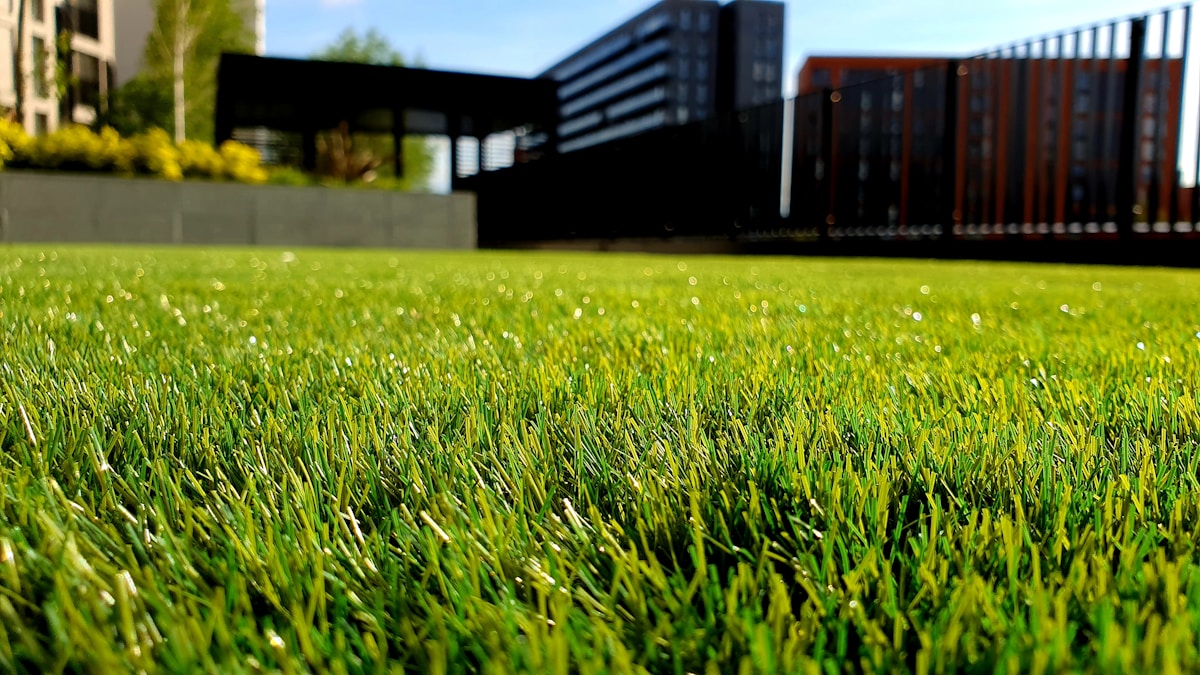
The Short Version: Start with pre-emergent herbicide in late winter, then gentle raking, spring fertilizer when grass greens up, and first mowing when it reaches 4 inches. Full timeline below.
Spring lawn prep isn’t about rushing into April when the grass looks green. It’s starting now—while your lawn is still mostly dormant. That three- to four-week window between late winter and mid-spring is when pre-emergent applications work best and when you can still perform heavy tasks like aeration without stimulating weed germination.
The key to spring lawn prep is timing, not magic. Do these steps in the right order during the right weeks, and your lawn will emerge strong, thick, and weed-free. Miss the timing, and you’re fighting problems all season.
What You’ll Need
Also helpful: core aerator, soil test kit, grass seed for patches.
⚠️ Safety Precautions
Spring lawn prep involves fertilizers, herbicides, and power equipment. Handle them safely:
- Wear gloves and safety glasses when applying fertilizers or herbicides
- Wash hands thoroughly after handling any lawn chemicals
- Keep children and pets off treated areas until products are watered in and grass is dry (check product label for specific timing)
- Wear hearing protection when using power equipment like aerators or dethatchers
- Wear closed-toe shoes when mowing or operating power equipment
- Read product labels — they contain important safety and application instructions
- Store chemicals properly in original containers, away from children and pets
When to Do This
Best Season: Late winter through early spring (typically February through early April).
Ideal Timing:
- Late Winter: Clean up debris, apply pre-emergent herbicide, and service equipment.
- Early Spring: Begin light fertilizing and mowing as grass breaks dormancy.
- Mid-Spring: Full-swing maintenance—aerating, overseeding, and regular mowing.
Watch for signs of dormancy breaking: green color returning to blade tips, growth resuming from absolute zero, and soil temperatures consistently above 50°F overnight. Once you see that green movement, it’s time to shift from heavy prep to lighter maintenance.
Step-by-Step Instructions
Step 1: Clean Up Winter Debris (Week 1-2 of Late Winter)
Start simple. Walk your entire lawn and pick up fallen branches, pine cones, matted leaves, and any debris that accumulated over winter. This debris traps moisture against your grass and encourages disease.
Use a leaf blower for leaves (it’s faster) and a rake for sticks. Don’t rake aggressively yet; your grass is still dormant and tender. The goal here is just visibility—you need to see your actual lawn to assess what comes next.
Time required: 30 minutes to 2 hours depending on lawn size.
Step 2: Assess Soil and Winter Damage (Week 2)
Walk the lawn closely and look for:
- Bare patches from heavy traffic, dog spots, or winter die-off
- Compacted areas where water pools or grass grows sparsely
- Snow mold or matting (brownish mats of dead grass stuck together)
- Thatch buildup (spongy, dead grass layer between soil and live grass)
If you see matting from snow mold, gently rake those areas with a thatching rake to break up the mats and allow air circulation. Thatch buildup should feel like a thick crust; if it’s deeper than 1/2 inch, mark those areas for aeration or dethatching.
Consider a soil test to check pH. Most grass prefers slightly acidic to neutral soil (6.0-7.0 pH). If pH is off, you may need lime or sulfur applications.
Step 3: Service Your Mower and Equipment (Week 2)
Before you’ll need to mow in spring, get your equipment ready:
- Change the oil (use the weight specified in your mower manual)
- Replace the air filter with a fresh filter
- Sharpen the blade (dull blades tear grass, creating brown tips and disease entry points)
- Check spark plugs and replace if fouled
- Top up fuel with fresh gas (old gas causes hard starts)
A sharp blade is non-negotiable. Dull mower blades tear grass tips, which leads to brown edges, disease, and stress. If you’re not confident sharpening, take it to a local small engine shop for $15–$25.
Time required: 45 minutes to 1 hour.
Step 4: Apply Pre-Emergent Herbicide (Late Winter to Early Spring)
This is the single most important chemical application you’ll make all spring. Pre-emergent herbicide stops crabgrass (and other weeds) from germinating before they ever sprout.
Timing is critical: Apply when soil temperature reaches 50–55°F for 3–5 consecutive days. This is usually late winter through early spring. Apply too early and it breaks down; too late and crabgrass is already germinating.
How to apply:
- Use a broadcast spreader set to the product’s recommended rate (read the label—rates vary by product)
- Walk a consistent pattern across your lawn—stripes going one direction, then perpendicular stripes
- Don’t apply near new seed or freshly aerified areas (it blocks grass seed germination too)
- Water lightly after application to activate the herbicide
Important: If you plan to aerate or overseed, do it before applying pre-emergent, not after.
Time required: 1–2 hours.
Step 5: Gentle Raking for Thatch and Moss (Early Spring)
Once you see green color returning to grass tips—usually early spring—wait for a dry day and gently rake with a flexible thatching rake. You’re not trying to scalp the lawn; you’re breaking up thatch layers deeper than 1/2 inch and removing any matted snow mold.
Rake in one direction, then go lightly perpendicular. Stop when the lawn looks a bit roughed up but not bare. You should still see living grass after raking.
If you see white fuzz (fungus), thatch so thick it’s like walking on a sponge, or moss, consider professional dethatch or rent an electric dethatcher. For most lawns, gentle raking is enough.
Time required: 1–2 hours.
Step 6: Aerate if Necessary (Mid-Spring)
Only aerate if you have real soil compaction issues (hard ground, sparse grass, water pooling). Aeration opens the soil to water, air, and nutrients.
How to aerate:
- Rent a core aerator from a local equipment rental shop ($40–$80 per day) or use a manual core aerator
- Run it in one direction, then perpendicular—like mowing stripes
- Leave the soil plugs on the lawn to dry and break down
- Avoid aerating within 4 weeks of applying pre-emergent (it disrupts the herbicide barrier)
After aeration, apply a light fertilizer and water to help the lawn recover from the stress.
Time required: 2–4 hours (depending on lawn size).
Step 7: Overseed Bare Patches (Mid-Spring)
For thin areas, dog spots, or bare patches:
- Rough up the soil with a rake or edger
- Spread quality grass seed rated for your region and climate
- Lightly rake seed into soil contact
- Keep the area moist (not waterlogged) until grass sprouts
- Avoid heavy foot traffic for 4 weeks
Seed will germinate in 7–14 days if soil is warm enough. Keep it consistently moist until you see green shoots.
Time required: 30 minutes to 1 hour (for multiple patches).
Step 8: Fertilize Strategically (Mid-Spring Onward)
Critical rule: Don’t fertilize while grass is dormant. It’s like feeding someone who’s sleeping—it doesn’t work.
Once you see green color and active growth, apply Scotts Turf Builder Lawn Food (higher in nitrogen and phosphorus). Read the label and follow the spreader settings.
Apply at the recommended rate—too much causes disease and excessive thatch. One application is often enough in spring; wait until summer to apply more.
Time required: 30 minutes to 1 hour.
Step 9: First Mowing (Mid-Spring)
Once grass reaches 4 inches tall and is actively growing, it’s time to mow.
Mowing best practices:
- Mow when grass is dry (wet clippings clump and stress the lawn)
- Set blade height to 3–4 inches for most grass types
- Never remove more than 1/3 of the blade in one mowing
- Mow in different patterns each time to avoid soil compaction and ruts
For the first mow of some warm-season grasses, some gardeners “scalp” to remove dead material and thatch. If you scalp, cut to 1–2 inches, then bag and remove clippings. Otherwise, mulch clippings back into the lawn for nutrients.
After that first mow, aim for weekly mowing as growth picks up.
Time required: 30 minutes to 1.5 hours.
Step 10: Water Appropriately (Ongoing)
Spring weather is unpredictable—you might get rain or drought. During dry springs, water once per week, applying 1–1.5 inches total (including rain). Water deeply to encourage deep root growth; frequent shallow watering weakens roots.
Water early morning to reduce evaporation and disease risk. Avoid evening watering if possible. A watering timer helps maintain consistent schedules.
If spring rains are regular, skip watering and let nature do the work. Watch the soil—if the top 2 inches are moist, skip watering that week.
Expected Results & Timeline
| Timeline | What You’ll See |
|---|---|
| Late Winter | Lawn still brown, debris cleaned, equipment serviced, pre-emergent applied |
| Early Spring | Grass begins green-up, gentle raking complete, no crabgrass sprouting |
| Mid-Spring | Active growth, first mowing, light fertilizer applied, bare patches seeded |
| Late Spring | Thick green growth, weekly mowing routine established, new grass filling in bare patches |
| Early Summer | Full, healthy lawn ready for summer stress management |
Your payoff: A thick, weed-free, disease-resistant lawn heading into summer. This is the foundation that keeps your grass healthy through summer heat.
Regional Timing Adjustments
Northern Climate:
- Soil temps reach 50°F around mid-March
- First mow typically early to mid-April
- Watch for late freezes; avoid sensitive applications until risk passes
Moderate Climate:
- Dormancy breaks earlier—early to mid-March
- Pre-emergent window tighter; apply by early March
- Spring heat arrives earlier; move to summer maintenance sooner
Southern Climate:
- Dormancy breaks in early March or even late February
- Apply pre-emergent by early March at latest
- First mow possibly mid-March
- Transition to summer heat and watering by late April
Humid/Coastal Areas:
- Higher humidity = higher disease risk; consider preventive fungicide
- Watch for heavy spring rains
- Ensure good drainage to prevent waterlogging
FAQ
Q: Should I scalp my lawn in spring? A: Only if you have heavy thatch and warm-season grass. For most lawns, gentle raking and normal mowing is enough. Scalping is stressful; consider it only if you have serious dormant brown material.
Q: Can I overseed in spring if I already applied pre-emergent? A: No. Pre-emergent blocks all seed germination. Apply pre-emergent to established areas only, not where you’re overseeding. Overseed first (if needed), then apply pre-emergent to the rest of the lawn.
Q: What if I miss the pre-emergent window? A: It’s not the end of the world. Apply it as soon as you realize, but understand crabgrass may already be germinating. Be ready to spot-spray post-emergent herbicide for stragglers later.
Q: Is aeration necessary every spring? A: No. Aerate only if you have compaction issues (traffic areas, hard soil, poor water drainage). Over-aerating isn’t harmful, but it’s unnecessary cost and labor.
Q: When should I stop fertilizing? A: Spring fertilizer application is typically once in mid-spring. Wait until late spring or early summer for summer feeding, if needed. Don’t over-fertilize spring; it causes weak, disease-prone growth.
Q: Why is my grass still brown in spring? A: Dormancy sometimes lingers if soil stays cool or if your grass variety breaks dormancy later. Keep waiting; it’ll green up. Don’t panic and over-fertilize.
Q: Can I do all these tasks myself, or should I hire someone? A: All of these are DIY-friendly. Aeration is the only one that might warrant rental equipment or professional help if you have a large lawn. Everything else is manageable for a homeowner willing to spend a Saturday.
Q: Should I use organic or synthetic fertilizer in spring? A: Both work. Synthetic is faster-acting; organic releases slowly. For spring, either is fine. Read the label and follow application rates. Avoid over-applying.
Q: What if my lawn has disease? A: If you see patchy spots, dollar spots, or mold-like growth, apply a fungicide (granular or liquid, depending on the product). Improve air circulation by removing thatch and mowing high. Reduce watering frequency. If disease persists, consult a local extension office or lawn specialist.
Related Articles
- Troubleshooting: Brown Patches in Your Lawn
- How-To: Overseed Your Lawn for a Thicker, Healthier Yard
- How-To: Apply Pre-Emergent Herbicide
Final Thoughts
Spring lawn prep is about timing, not magic. Do these ten steps in the right order during the right weeks, and your lawn will emerge strong, thick, and weed-free. You have an advantage if you start early: dormancy breaks gently, which gives you a long growing season to build a healthy lawn before summer stress hits.
Start now. Don’t wait for late spring. The difference between a lawn prepped in late winter and one prepped in late spring is visible by midsummer—and that difference matters during peak heat.
Your lawn is about to work hard for you all summer. Give it this head start in spring with proper pre-emergent timing, strategic fertilization, and consistent care, and it’ll thank you with lush, vibrant growth.