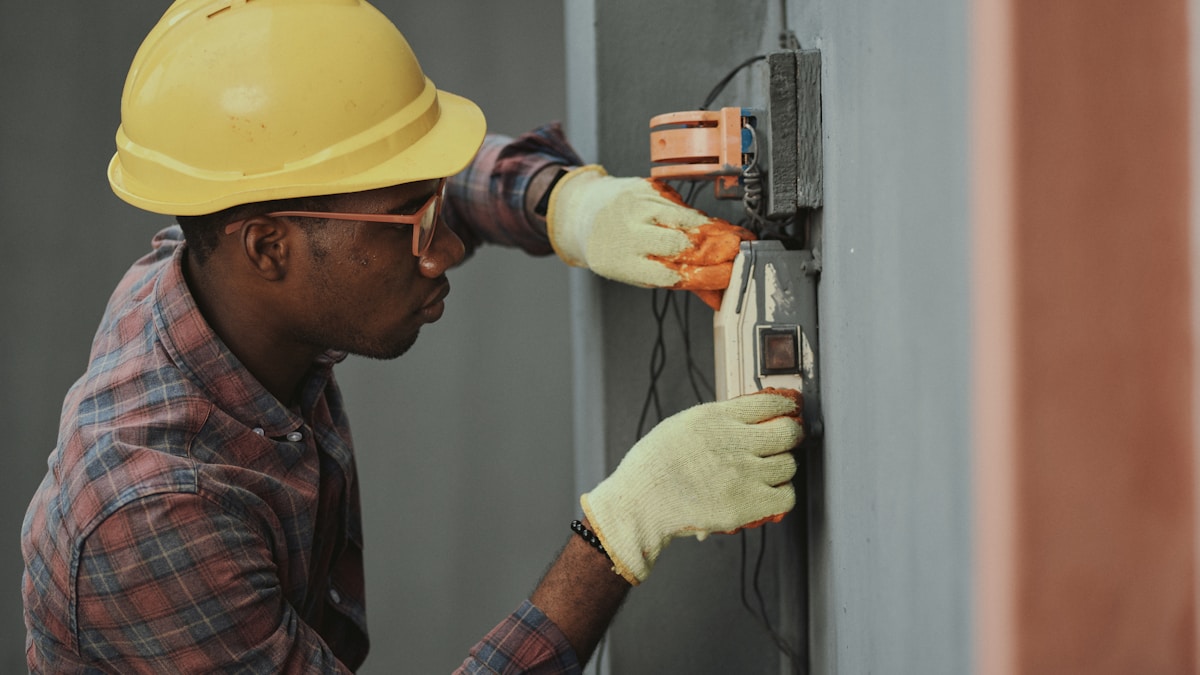
Quick Fix: First, check your thermostat settings. Is it on "Cool" and "Auto"? Next, replace your air filter. Dirty filters are the top killer of cold air. Get a quality MERV 11 filter for better filtration. For the full diagnostic, keep reading.
Diagnose the Problem
Your AC unit is a system, and when one part’s out of whack, the whole thing suffers. Before you start tearing into wiring, let’s pinpoint the culprit. This table will help you zero in on the most likely issues.
| Symptom | Likely Cause | Fix |
|---|---|---|
| AC runs, but air isn’t cold | Dirty Air Filter, Thermostat Issue, Dirty Coils, Low Refrigerant | Fix #1, #2, #3 |
| AC makes noise but doesn’t blow | Frozen Evaporator Coils, Blower Motor Issue (pro fix) | Fix #4, Call a Pro |
| Water leaking near indoor unit | Clogged Condensate Drain | Fix #5 |
| AC unit outside isn’t running | Tripped Breaker, Faulty Contactor, Bad Capacitor (pro fix) | Fix #2 (Breaker), Call a Pro |
What You’ll Need
Fix 1: The Dirty Air Filter Dilemma
Your air filter is the first line of defense against dust and debris. When it gets clogged, your AC can’t breathe. That means less airflow, restricted cooling, and overworked components. Neglect this, and you’re asking for trouble.
Steps:
- Locate your filter — Usually in the return air vent, often in the ceiling or a wall, or in the air handler unit itself.
- Note the size — The old filter will have its dimensions printed on the frame (e.g., 20x25x1). Don’t cheap out on filters—invest in a MERV 11 filter for better air quality and system protection.
- Replace it — Slide the old one out, slide a new one in, making sure the arrow points in the direction of airflow towards the furnace/air handler.
- Test — Turn your AC back on and feel for colder air within 15-20 minutes.
Time: 5-10 minutes
Fix 2: Thermostat Troubles & Breaker Checks
Sometimes the problem isn’t the AC; it’s the brain telling it what to do, or the power supply getting cut off. These are the easiest checks you can make.
Steps:
- Check Thermostat Settings — Ensure it’s set to “Cool” and the fan is on “Auto,” not “On.” “On” means the fan runs constantly, even if it’s not cooling. Set your desired temperature lower than the current room temperature.
- Replace Batteries — If your thermostat uses batteries, swap in fresh alkaline batteries. Don’t skip this—a weak battery can cause all sorts of erratic behavior.
- Check Circuit Breaker — Head to your electrical panel. Look for a tripped breaker labeled “AC,” “Furnace,” or “Air Handler.” It might be halfway between “On” and “Off.” Flip it completely OFF, then firmly back to ON. Wait 5 minutes before turning the AC back on to protect the compressor.
Time: 10-15 minutes
Fix 3: Clearing the Outdoor Unit (Condenser)
The large unit outside your house is the condenser. It expels heat from your home. If it’s covered in leaves, dirt, or grass clippings, it can’t do its job, and your AC won’t cool effectively.
Steps:
- Turn off Power — IMPORTANT: Go to your outdoor disconnect box (usually near the condenser) and flip the switch to OFF. You may also want to trip the AC breaker inside for extra safety.
- Clear Debris — Use a soft brush, gloved hands, or a shop vac to remove leaves, grass, and dirt from around and within the fins of the condenser unit. Trim back any bushes or plants within 2 feet of the unit.
- Apply Coil Cleaner — For stubborn grime, spray the condenser fins with Simple Green Foaming Coil Cleaner. Let it penetrate for the time specified on the label.
- Gentle Rinse — For surface dirt, you can gently spray the fins with a garden hose (low pressure), aiming from the inside out to push debris away. Avoid high pressure, which can bend the delicate fins.
- Restore Power — Once clean and dry, restore power at the disconnect and the breaker.
Time: 20-45 minutes
Fix 4: Thawing Frozen Coils
If you find ice on your indoor (evaporator) coils or refrigerant lines, it’s a sign of a deeper issue, often related to airflow or low refrigerant. But first, you need to thaw it out. Running an AC with frozen coils can cause serious damage.
Steps:
- Turn AC Off — Set your thermostat to “Off” and the fan to “On.” This will help melt the ice with continuous airflow without the cooling cycle.
- Wait for Thaw — This can take anywhere from a few hours to a full day, depending on the ice buildup. You might place towels to catch any dripping water.
- Inspect and Prevent — Once thawed, check your air filter (Fix #1). Ensure all vents are open. If the freezing recurs quickly, you likely have a low refrigerant level, which requires a professional.
Time: 2-24 hours (for thawing) + 15 minutes (for checks)
Fix 5: The Clogged Condensate Drain
When your AC cools, it removes humidity from the air, creating condensation (water). This water collects in a drain pan and flows out through a condensate line. If this line gets clogged, water backs up, often triggering a safety switch that shuts off your AC. This is a common and often overlooked issue.
Steps:
- Locate the Drain Line — This is typically a PVC pipe exiting your indoor air handler unit. It may run outside or into a household drain.
- Check for Water in the Pan — If there’s standing water in the drain pan, you have a clog.
- Clear the Clog — Use a wet/dry vac to suction out the clog from the access point near the air handler, or pour a cup of distilled vinegar mixed with water (50/50) down the access port. Let it sit for 30 minutes, then flush with water.
- Test — After clearing, ensure water can flow freely. Pour a cup of water down the drain line to confirm it’s flowing properly.
Time: 15-30 minutes
When to Call a Pro
You’re a capable DIYer, but some AC issues are best left to the pros. Call an HVAC technician if:
- You suspect a refrigerant leak. Handling refrigerant requires EPA Section 608 certification—it’s illegal for unlicensed individuals to purchase or handle refrigerants. Don’t attempt to recharge your system yourself.
- The compressor isn’t running, or the outdoor unit isn’t engaging despite power.
- The blower motor isn’t working, and simple checks (breaker, power) don’t fix it.
- You’ve tried all the DIY fixes, and your AC is still not cooling.
- You’re uncomfortable with any part of the repair process, especially electrical components.
⚠️ Safety Note: Always turn off power at the breaker and outdoor disconnect before working on any AC components. Never attempt repairs involving refrigerant lines, electrical wiring inside the unit, or the compressor.
FAQ
Why is my AC running but not blowing cold air? Most often, it’s a dirty air filter, incorrect thermostat settings, or a dirty outdoor condenser unit restricting heat exchange. Start with those checks.
How often should I change my AC filter? Generally every 1-3 months, depending on filter type, pets, allergies, and system usage. Check it monthly and replace when it looks dirty.
Can I clean my AC coils myself? Yes, you can gently clean the outdoor condenser coils with a hose and a soft brush after cutting power. For indoor evaporator coils, use a specialized no-rinse foam cleaner after confirming it’s appropriate for your unit. Always follow product instructions carefully.