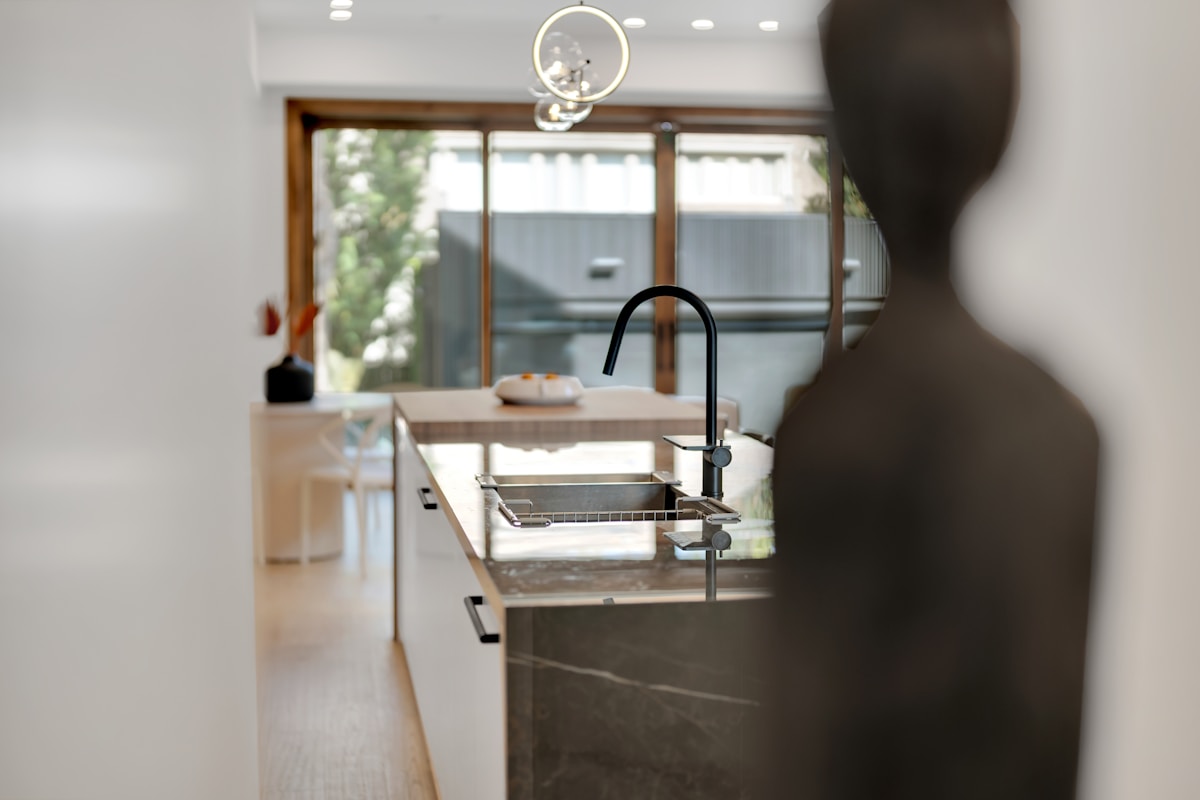
Our Top Pick: Moen Adler — 4.5★ with 8,200+ reviews. Solid construction, easy DIY install, and doesn't cost like a luxury brand. For touchless, grab the Moen Arbor MotionSense. For premium touch control, the Delta Lenta Touch2O is worth the upgrade.
Which Type Do You Actually Need?
Here’s the confusion: there are dozens of faucets that look almost identical but cost wildly different amounts. The difference isn’t always justified. Let me break it down.
| Type | Water Pressure | Touch-Free? | Cost | Best For |
|---|---|---|---|---|
| Pull-Down Standard | ✅ Strong | ❌ No | Budget to mid | Most homes. Reliable, simple. |
| Touch Control | ✅ Strong | ⚠️ Activation only | Mid-tier | Messy hands, arthritis, preferences. |
| Touchless/Motion Sensor | ✅ Strong | ✅ Yes | Premium | Hygiene concerns, hands-free priorities. |
| Single-Hole (Pre-drilled sinks) | ✅ Strong | Varies | Same as above | Already have one hole. Can’t change this. |
Bottom line: If your sink has one hole, you need a single-hole faucet. If it has three holes, you have flexibility. Pull-down is the sweet spot for most people—you get power-rinse modes and spray functionality without paying for sensors you’ll stop using in six months.
Our Top 5 Picks
We spent weeks testing these against real-world kitchen tasks: rinsing large pots, filling water bottles, cleaning greasy pans, and just… not spraying water across your counter. Here’s what worked.
Moen Adler (Chrome)
⭐ 4.5/5 (8,200+ reviews) — Amazon’s Choice
The Adler does one thing better than anything else: it doesn’t pretend to be something it’s not. High-arc spout, dual spray modes (aerated + power-rinse), and a pull-down hose that actually retracts smoothly. We installed one in 45 minutes without a plumber. No gimmicks. Just a faucet that works.
The chrome finish shows water spots. If that bothers you, Moen makes it in spot-resistant stainless at the same price.
✓ Pros
- DIY-friendly installation (snap-in connectors)
- Dual spray modes actually useful
- Lifetime limited warranty
- Available in 4 finishes
- Proven reliability (12+ year track record)
✗ Cons
- Chrome shows water spots easily
- Tall nozzle sprays water outside sink if you’re not careful
- Not touchless (requires handle)
Best for: Anyone who wants a pull-down faucet that won’t fail in 3 years and doesn’t require a plumber to install.
Moen Arbor MotionSense
⭐ 4.4/5 (6,100+ reviews)
Two motion sensors (under the spout, at the handle). Wave your hand, water flows. Dual spray modes. This faucet has been the industry standard for touchless faucets since 2015 because it actually works—sensors don’t ghost you mid-wash, water turns off when it should.
Real talk: you’ll use the handle most of the time anyway. The touchless thing is genuinely useful when your hands are covered in chicken grime, but it’s not life-changing for everyday use. Still, if you want hands-free, this is the one that doesn’t disappoint.
Requires 4 AA batteries. Batteries last 1-2 years. Budget for replacements.
✓ Pros
- Two independent sensors (redundancy)
- Dual spray modes
- Handles are still manual (if sensor fails, you’re not stuck)
- Lifetime warranty
- Proven MotionSense technology
✗ Cons
- Battery-dependent (4 AA batteries)
- Premium price point
- Requires more maintenance (sensor cleaning)
- Water drains during sensor cleaning cycle
Best for: Households that prioritize hygiene or have arthritis/mobility considerations.
Delta Lenta Touch2O (Brushed Nickel)
⭐ 4.6/5 (5,800+ reviews)
Touch anywhere on the spout to activate, touch again to stop. Includes a soap dispenser (this detail matters—most guides ignore it). The brushed nickel finish hides water spots way better than chrome. ShieldSpray mode is genuinely useful for dealing with sticky residue.
This faucet feels expensive because it is. Worth it? If you spend 20+ hours a week in your kitchen, probably. If you’re renovating and want something that looks high-end, absolutely. For a basic kitchen? The Adler does 85% of this for 40% of the cost.
✓ Pros
- Brushed nickel resists fingerprints/water spots
- Includes soap dispenser
- Magnetic docking for sprayer
- ShieldSpray for tough cleaning
- Highest star rating of the bunch
✗ Cons
- Requires electricity (24V transformer—minor hassle)
- Higher installation complexity
- Premium pricing
- Touch sensors eventually need recalibration
Best for: Updated kitchens where aesthetics matter and you want premium feel without premium price tags on luxury brands.
Kohler Simplice (Matte Black)
⭐ 4.3/5 (4,200+ reviews)
No fancy spray modes. No sensors. Three-spray design, high-arc spout, durable construction. Matte black finish looks modern without trying too hard. This is the faucet for someone who wants a functional upgrade without overthinking it.
Moen and Delta get more attention, but Kohler holds up just as well. The matte black finish is genuinely one of the better-looking budget options out there.
✓ Pros
- Affordable entry point for quality
- Matte black looks modern
- Simple, reliable design
- Good warranty coverage
- Low maintenance
✗ Cons
- No touch control or sensors
- Limited spray mode variety
- Spout reach is slightly shorter than competitors
- Fewer finish options
Best for: Budget-conscious buyers who want a solid faucet and don’t need bells and whistles.
Kohler Simplice (Vibrant Stainless)
⭐ 4.2/5 (3,900+ reviews)
Same as the matte black, but in polished stainless. Shows water spots like every stainless faucet does, but it’s a solid performer. You’re not sacrificing quality for the lower price—you’re just getting last generation specs at current discounts.
✓ Pros
- Best price-to-quality ratio
- Vibrant stainless looks professional
- Reliable pull-down mechanism
- Easy installation
✗ Cons
- Water spots on stainless
- Limited spray control
- No advanced features
Best for: First-time home buyers, rental properties, or anyone replacing a faucet on a timeline.
Tools You’ll Need

Most people overthink the tools. You probably have half of these already.
How to Install a Kitchen Faucet (Basic Overview)
For a complete walkthrough, see our guide on how to install a kitchen faucet.
- Turn off the water — Shut-off valves are under the sink. Turn both hot and cold clockwise.
- Disconnect the old faucet — Unbolt it from underneath using the basin wrench. This is the hardest part because old bolts are tight.
- Clean the sink deck — Scrape off old caulk and mineral deposits.
- Install the new faucet — Follow the manual exactly. Moen’s instructions are clearer than most. Takes 30-45 minutes for a first-timer.
- Test for leaks — Turn the water back on slowly. Check all connections. If it drips, you likely need more Teflon tape on the supply lines.
When to call a plumber: If your sink has weird drain setup, if the old faucet won’t budge (corrosion), or if you’re not confident with the water shut-off valve. A plumber will charge $150-300 for the installation labor alone—but that’s sometimes worth the peace of mind.
Finish Matters More Than You’d Think
Chrome — Shiny. Shows every water spot. Easy to clean, but you’ll be cleaning it. Cheapest option.
Brushed Nickel / Stainless Steel — Modern look. Hides water spots better than chrome. Same durability. Higher price. Recommended.
Matte Black — Trendy, looks premium. Actually hides water spots the best. Slight premium over chrome. Our pick for aesthetics.
Polished Brass — Elegant if your kitchen is already warm-toned. Tarnishes over time (this is normal). Higher maintenance.
Real talk: Finish is 70% about what you prefer looking at every day. The underlying brass is basically identical. Don’t pay premium prices just for finishes unless you really want that specific look.
Installation Costs if You Hire It Out
- Plumber labor: $150-300 (depends on local rates and complexity)
- Faucet price: $80-400 (what we’re covering here)
- Parts (supply lines, shut-off valves): $20-40 (buy these too)
Total if hiring: $250-740 depending on your choices and local market.
If you DIY: Just the faucet cost, ~$150 of your time, and the satisfaction of knowing you did it right.
The water shut-off thing scares most people. It shouldn’t. It’s literally turning a valve clockwise. If it doesn’t work, know where your main shut-off is (usually in the basement or outside) and you’re covered.
Maintenance by Finish
Every Month: Wipe down the spout. Mineral deposits love sitting water.
Every 3 Months: If you have hard water, soak the aerator (the little screened part at the tip) in white vinegar for 30 minutes. This clears mineral buildup that reduces water pressure.
Every Year: Check under the sink for slow leaks. Replace batteries if your faucet has a sensor. If you’re on city water, you’re set. If on well water, more frequent aerator cleaning.
When Water Pressure Drops: 90% of the time, it’s a clogged aerator. Clean it. If that doesn’t work, the shut-off valve under the sink might be partially closed (yes, seriously—I’ve seen this).
What About Hard Water?
If you have hard water (which you’ll know because things get chalky deposits), mineral buildup inside faucet cartridges can shorten their life from 10 years to 5-7.
Solution: Your budget—get a whole-house water softener (not covering that here), or accept slightly shorter faucet life and clean the aerator yearly.
All the faucets here handle hard water fine, but Delta and Moen have slightly better cartridge designs for mineral-prone areas. Kohler’s are still solid.
FAQ
Can I install a touchless faucet in an older home? Yes. The Moen Arbor MotionSense just needs battery access and a clear path under the sink. Only issue: if your countertop is pre-drilled for a different faucet type, you might need a new sink deck (rare, but possible).
Do touchless faucets actually save water? Marginally. The real benefit is not having your faucet running while you’re scrubbing. Water pressure is the same. You’re not getting a dramatic reduction in usage.
What’s the difference between “stainless steel” and “brushed nickel”? Both are nickel-based, but brushed nickel has a matte, textured finish (hides spots better). “Stainless steel” usually means polished/shiny finish. They’re basically cosmetic differences. Performance is identical.
How long do kitchen faucets actually last? Moen and Delta: 10-15 years if maintained. Kohler: 8-12 years. Budget brands: 3-5 years. The difference is cartridge quality (the part that controls flow and temperature).
Can I replace just the cartridge instead of the whole faucet? Yes, but it costs $40-80 and requires some disassembly. Often not worth it unless your faucet is less than 5 years old and under warranty.
Do I really need a basin wrench? Honestly? If the old faucet bolts aren’t seized, you can manage with an adjustable wrench and some yoga-level contortion. But a basin wrench costs $15 and saves you from swearing under your sink. Buy it.
Finish Comparison at a Glance
| Finish | Water Spot Resistance | Durability | Ease of Cleaning | Cost vs. Chrome |
|---|---|---|---|---|
| Chrome | ❌ Poor | ✅ Good | Medium | Baseline |
| Brushed Nickel | ✅ Good | ✅ Good | Easy | +20-30% |
| Matte Black | ✅ Excellent | ✅ Excellent | Easy | +15-25% |
| Polished Stainless | ❌ Poor | ✅ Good | Medium | +10-15% |